Comparison
How the salts differ
Origin, form, and process. No mineral percentages and no health claims.
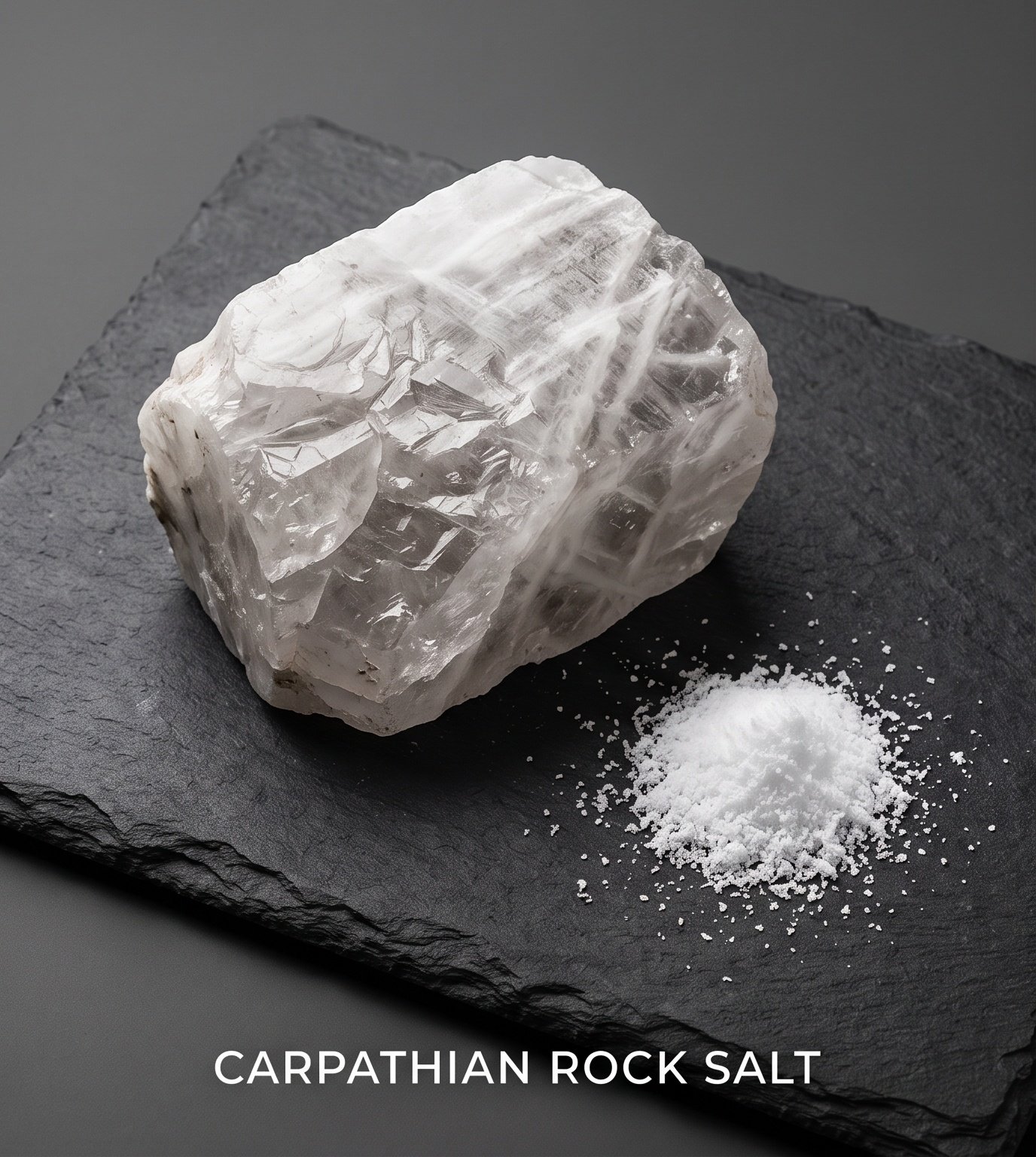
Carpathian rock salt
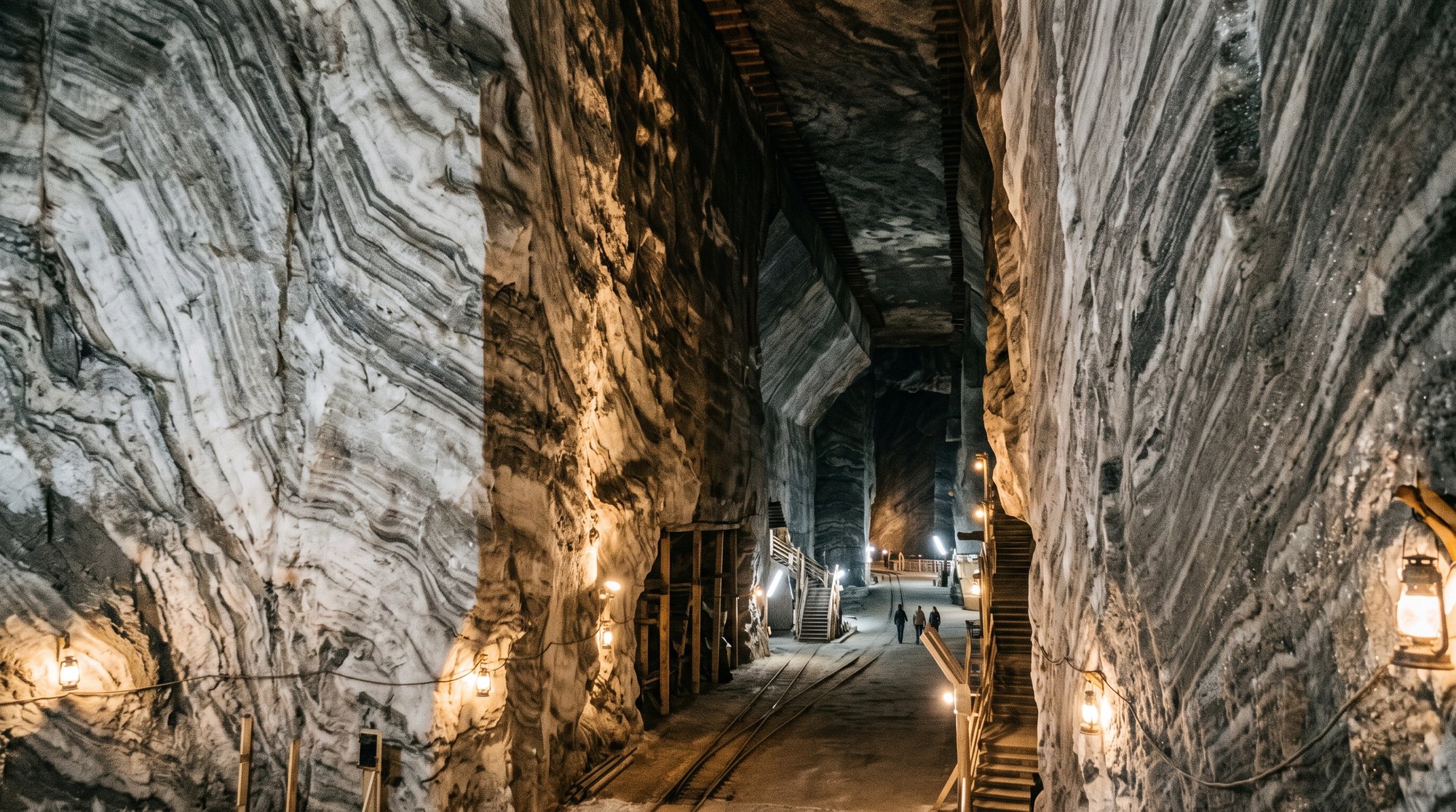
Miocene · Salina Târgu Ocna, Romania
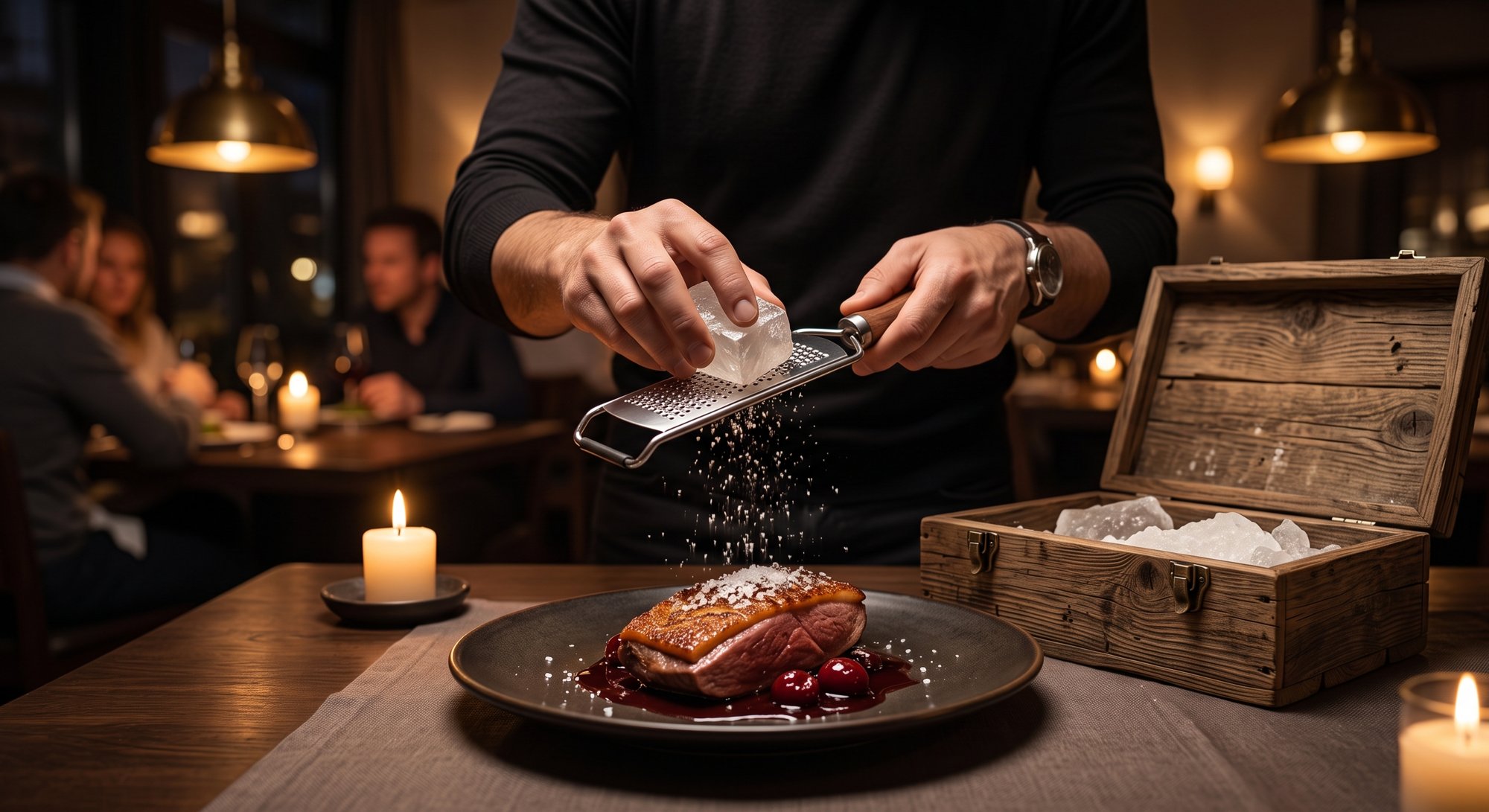
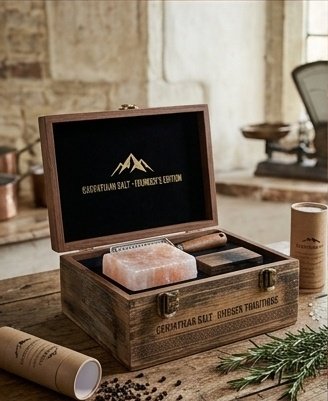
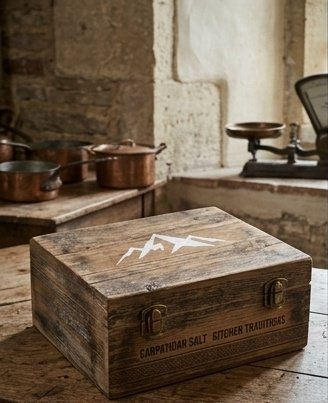
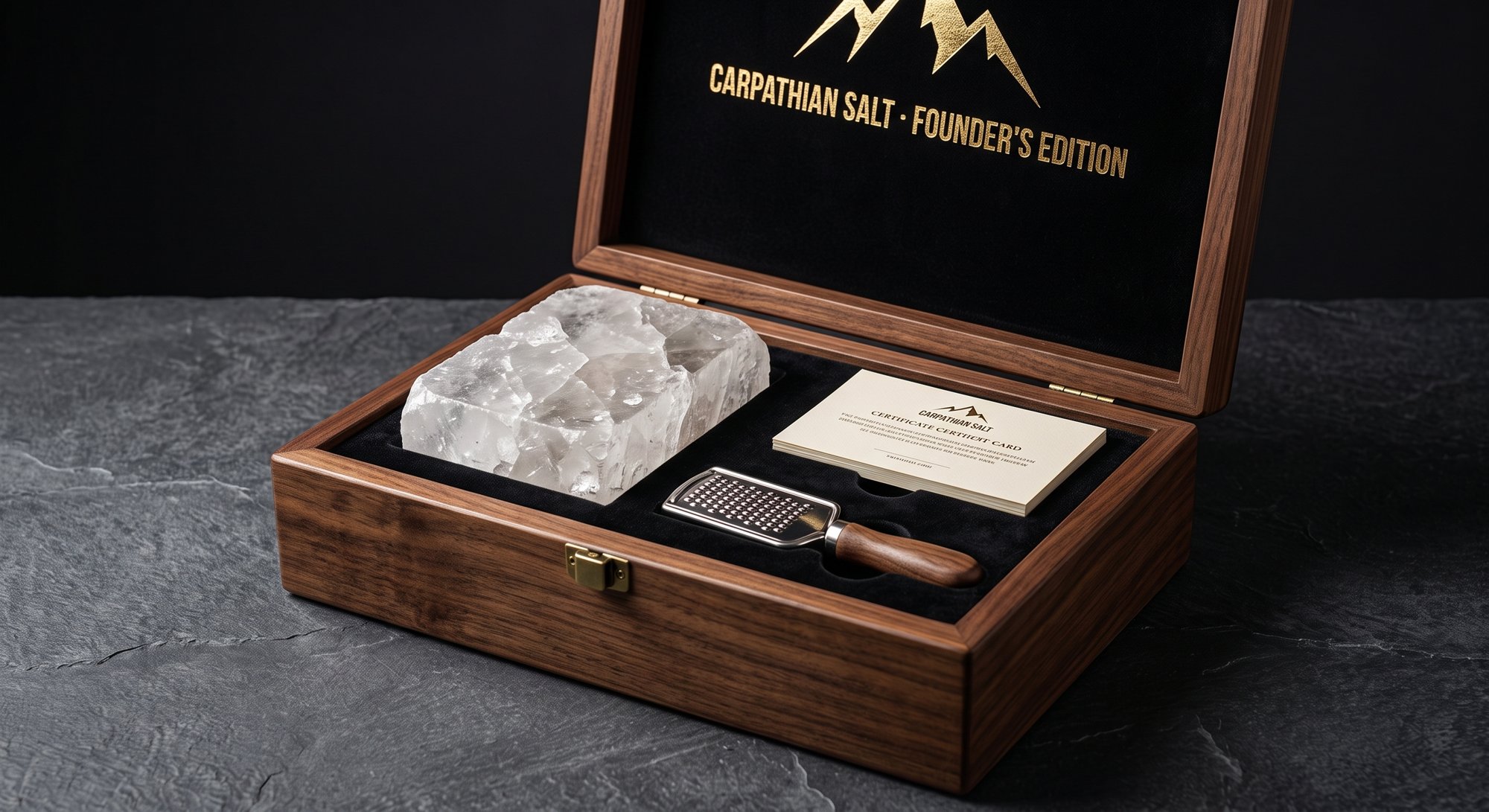
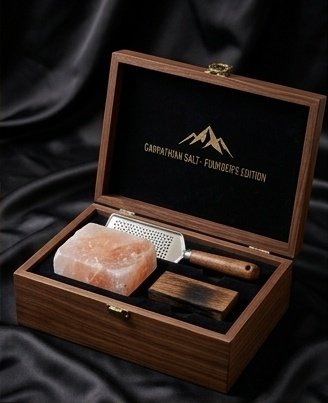
A solid block with a stainless grater, in a natural wood box. For grating at the table — not a cooking slab.
Flakes, crystals, or fine grains, usually in a jar or pouch.
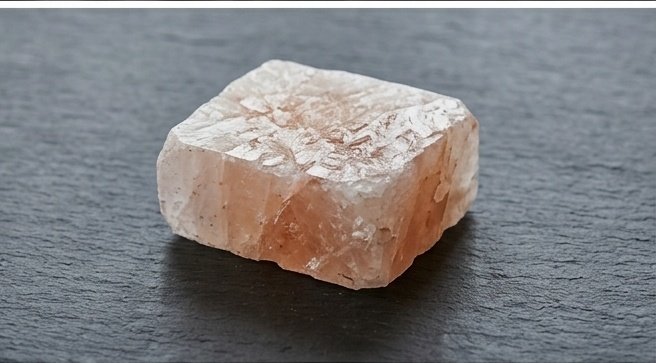
Often a pink block, and just as often ground crystals sold by other makers.
Selected rock for grating, not refined into free-flowing table salt. Hand-finished in Battersea, London. Orders leave in plastic-free packaging.
Evaporated from seawater, then dried and usually milled. Some brands add an anti-caking agent.
Cut or carved from underground rock. Also sold ground or refined by other producers.
Laid down in the Miocene, before synthetic plastics, and kept underground until it was mined. That is geology, not a laboratory certificate for this batch.
Made from today’s seas. Studies have found microplastic particles in many commercial sea salts — not a claim about every brand.
Ancient rock, not evaporated from the modern ocean. The same limit applies: origin, not a test result we publish.
Carpathian Salt is the block in the box. We do not assign mineral scores or health effects to any column.